Material, Structure, and Cultural Dialogue: Yung Ching, Chang’s Exploration of Contemporary Womenswear
Yung Ching, Chang is a Taiwanese fashion designer whose practice operates at the intersection of cultural translation and contemporary womenswear. Situated within a broader discourse on identity, materiality, and form, her work examines how traditional cultural structures can be rearticulated through modern garment construction. By engaging deeply with fabric behavior and structural manipulation, Yung Ching develops a design language that negotiates between historical reference and present-day embodiment.
Central to Yung Ching’s practice is the notion of “cultural translation”—not as replication, but as transformation. Rather than preserving traditional garments as static symbols, she reconstructs them through contemporary design methodologies. This is particularly evident in her reinterpretation of the kimono, where its inherent structural logic is deconstructed and reconfigured into modern womenswear. Through the integration of innovative material applications and tailored construction, the collection challenges the boundary between heritage and functionality. Its recognition at the CLA Fashion Design Competition, followed by commercial selection by manufacturers, underscores the capacity of her work to move beyond conceptual exploration into tangible industry relevance.
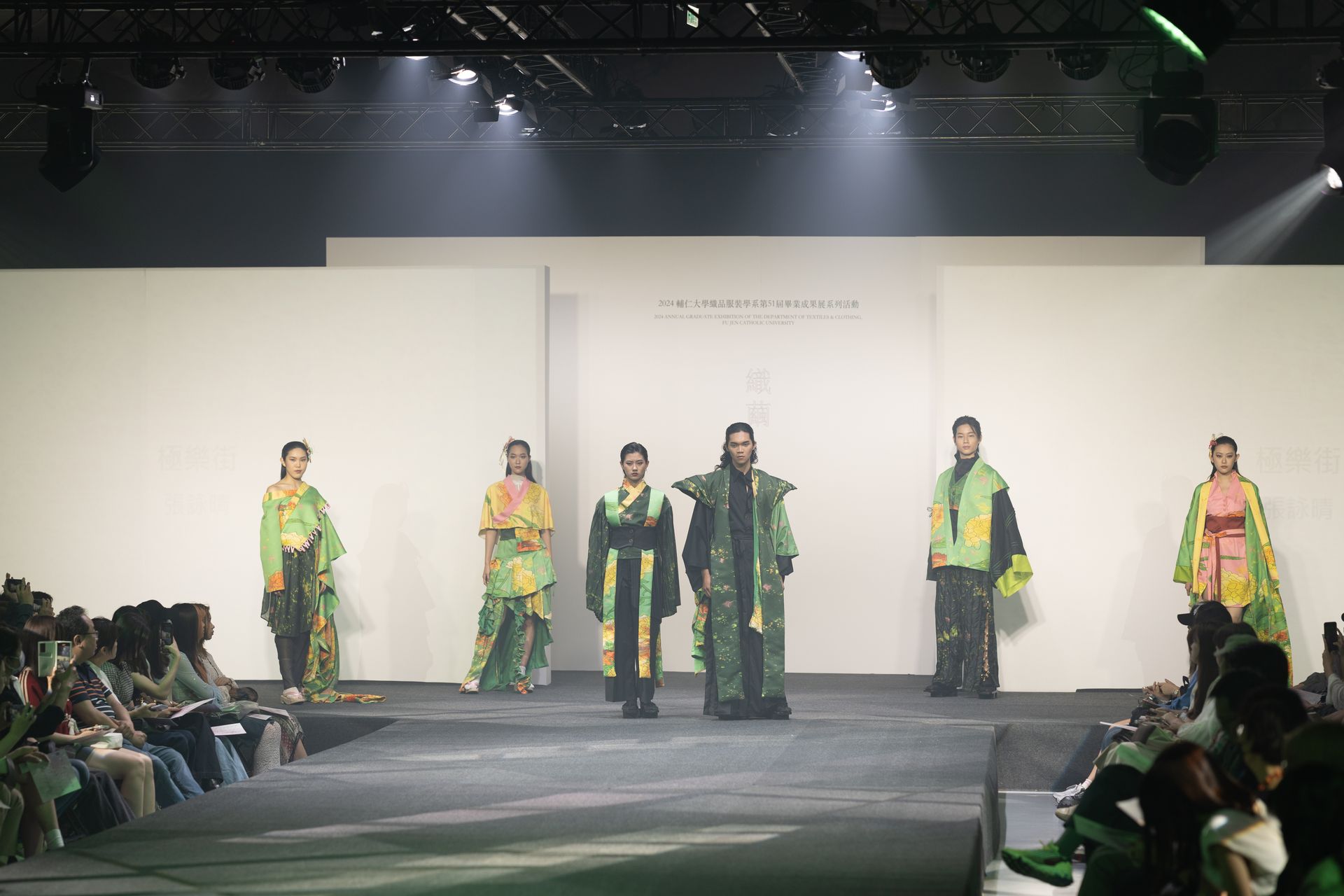
Her collection Bliss Street extends this investigation into the psychological and spatial dimensions of fashion. Presented on the runway at Songshan Cultural and Creative Park in Taipei, the project situates itself within a narrative of escapism, imagination, and fragmented identity. Yung Ching’s use of sculptural silhouettes and expressive material treatments generates a visual tension between reality and constructed fantasy. In this context, garments function not merely as wearable objects but as carriers of narrative, inviting viewers to navigate between familiarity and estrangement. The project’s circulation across multiple fashion media platforms further situates it within a broader cultural conversation.
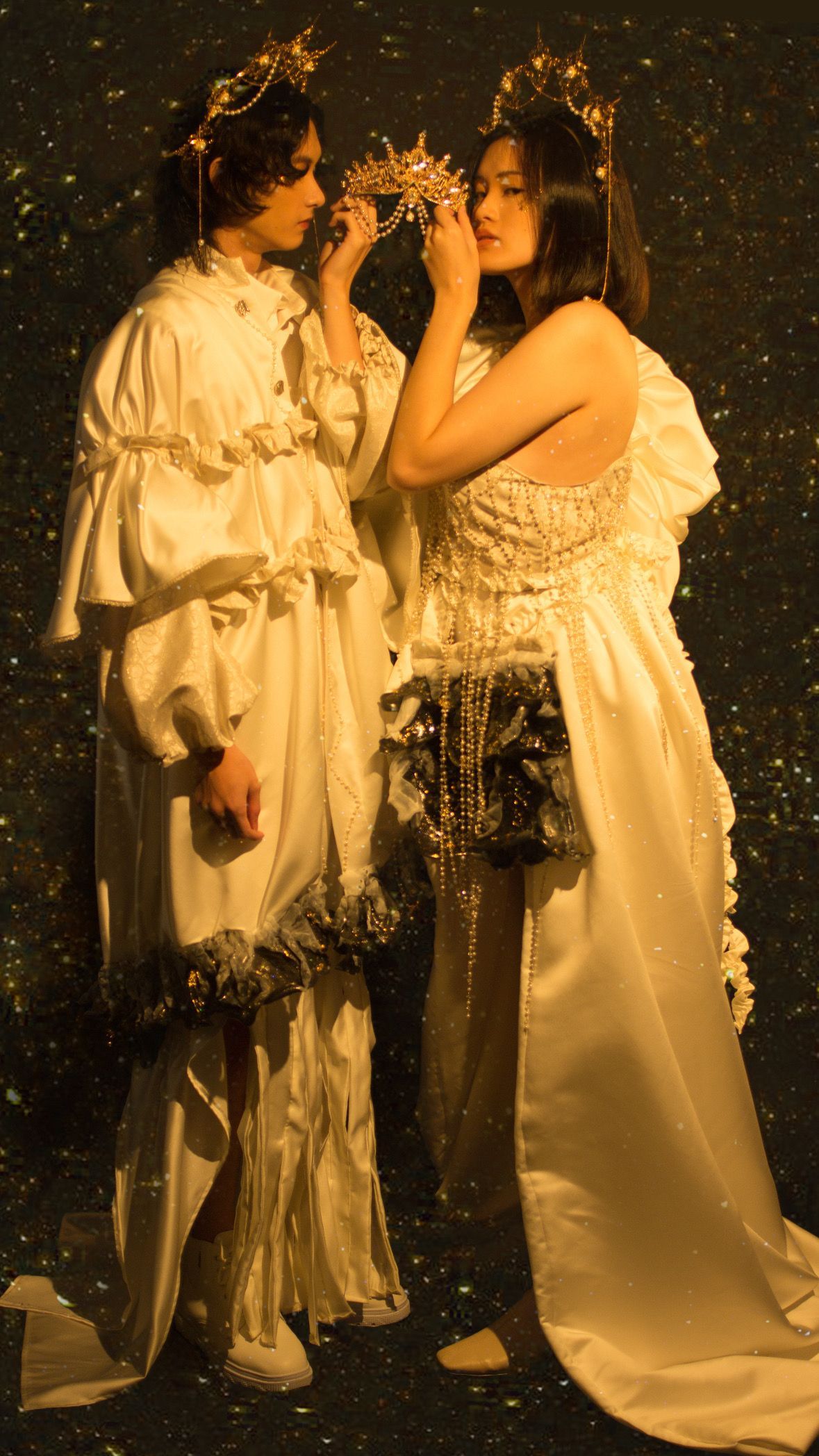
In contrast, Crown Yourself foregrounds material experimentation as a primary mode of inquiry. Drawing from the visual codes of European formalwear, the collection destabilizes conventional notions of fabric by incorporating unconventional substances such as gelatin. This deliberate disruption of material expectations repositions fashion as a multisensory medium, where tactility, temporality, and fragility become integral to the design process. By constructing both womenswear and menswear pieces within this framework, Yung Ching interrogates not only material boundaries but also the relationship between body, garment, and perception.
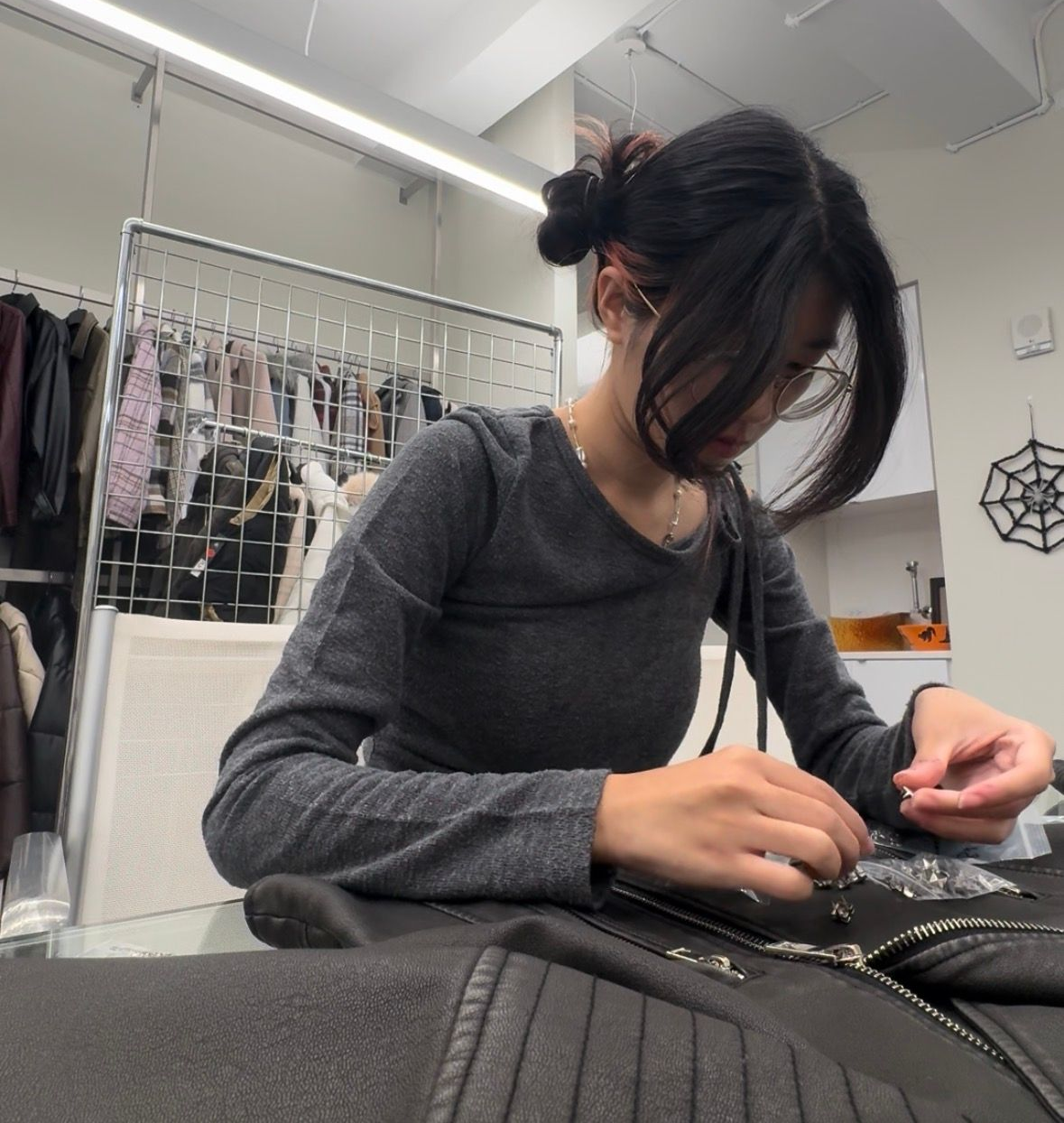
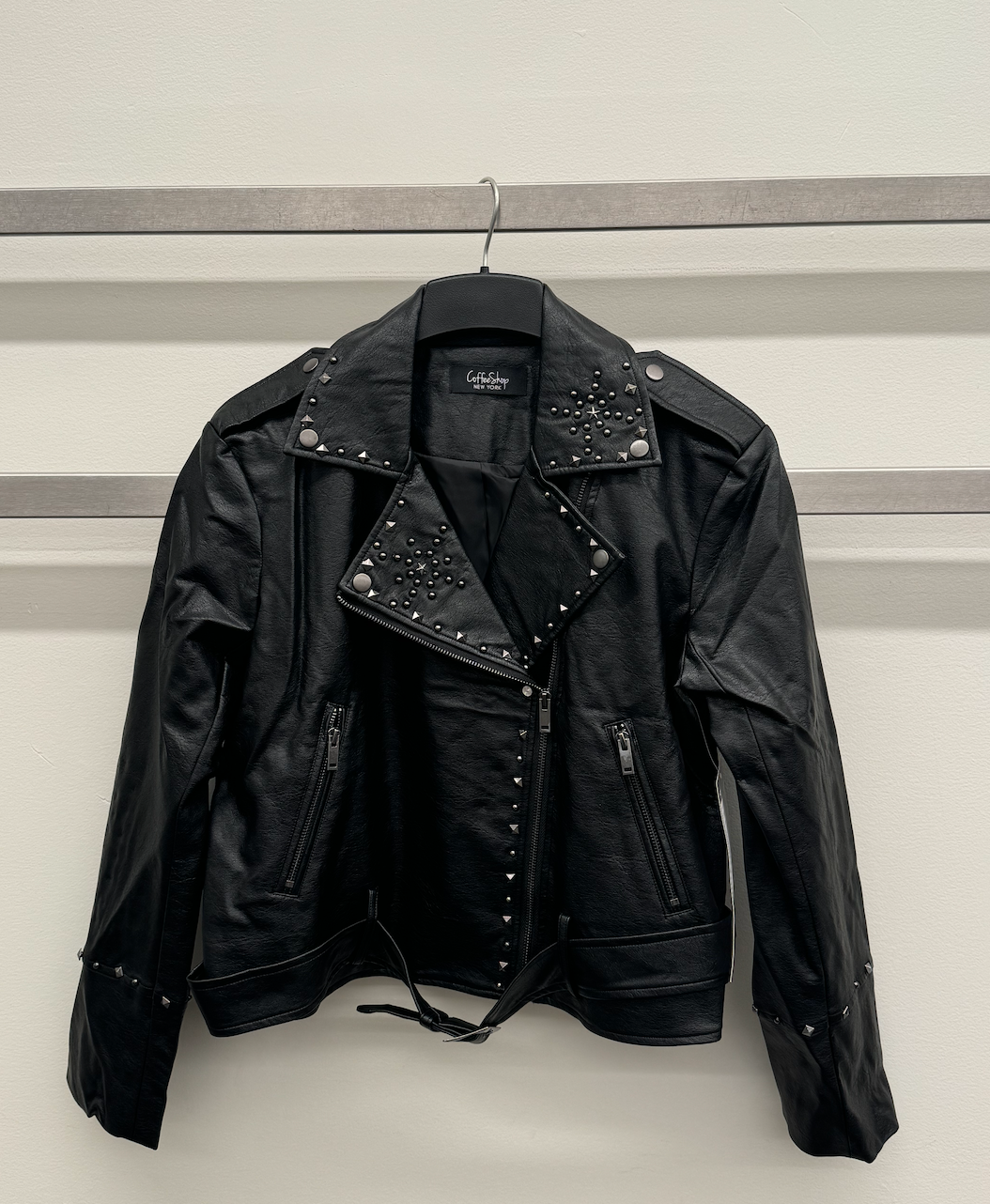
Across her professional trajectory, Yung Ching’s engagement with the fashion industry further informs her design methodology. Her experience at Santa Fe Apparel, where she contributed to leather outerwear design, deepened her understanding of material resistance, durability, and structural integrity. At JACHS NY, particularly within the JACHS Girlfriend womenswear line, she participated in the development of contemporary collections that respond directly to market-driven aesthetics and consumer behavior.
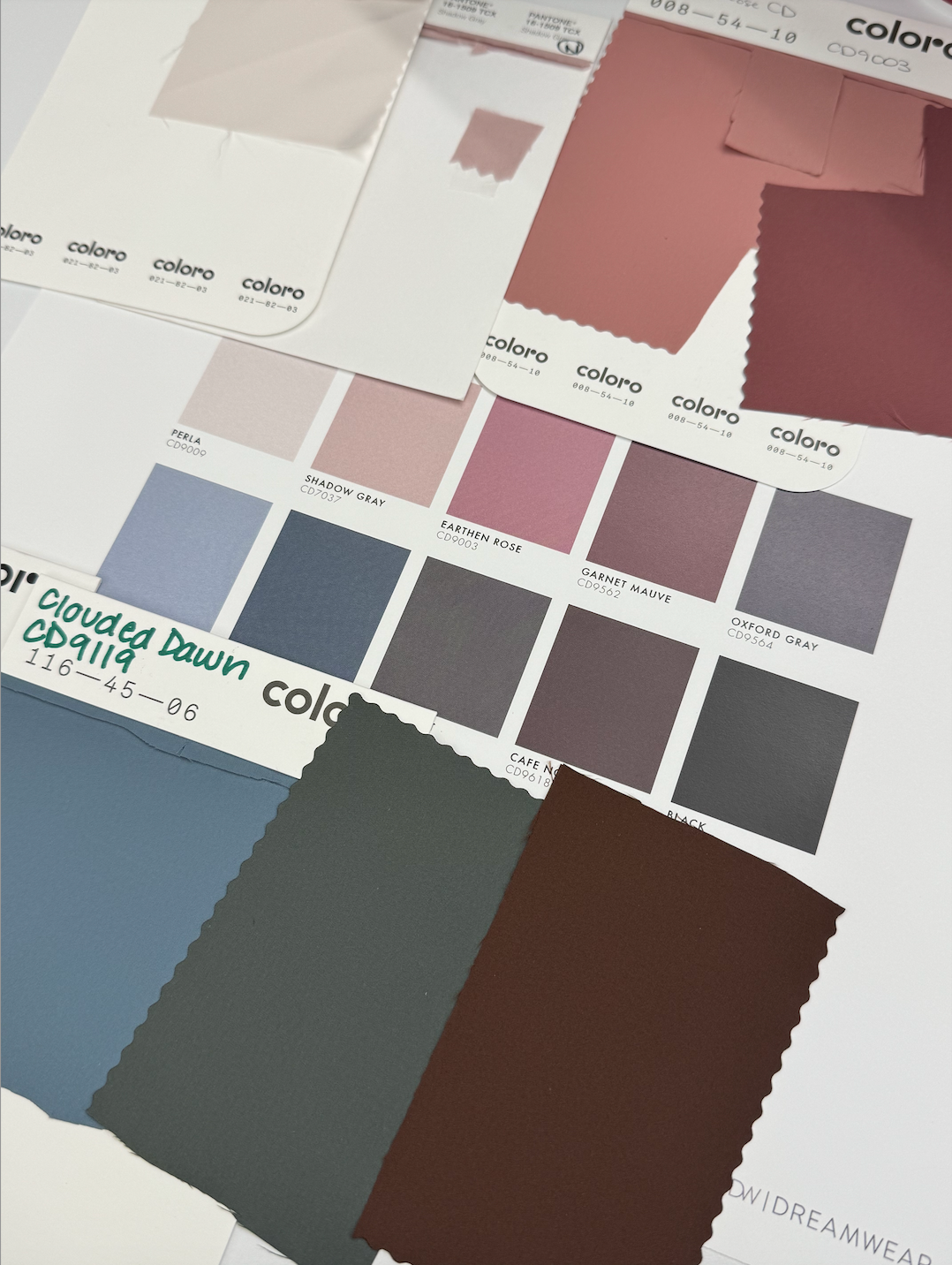
Her involvement with DREAMWEAR, contributing to brands such as Laura Ashley, Danskin, BLISS, and Nicole Miller New York, introduced her to the operational scale of commercial fashion systems. Working across concept development, color direction, technical flats, and BOM processes, Yung Ching navigates the translation of creative ideas into manufacturable outcomes. This dual engagement with both conceptual and industrial frameworks enables her to operate within a space that bridges artistic experimentation and production logic.
Within the context of contemporary fashion discourse, Yung Ching’s work can be understood as part of a broader shift toward material-conscious and structurally driven design practices. Her garments resist purely decorative readings, instead emphasizing construction as a site of meaning-making. Through this lens, fabric is not treated as a passive surface, but as an active agent that shapes form, movement, and perception.
Ultimately, Yung Ching’s practice positions fashion as a medium of cultural and material inquiry. By reconfiguring traditional forms through contemporary womenswear, she constructs a dialogue between past and present, body and structure, reality and imagination. In doing so, her work not only redefines the parameters of garment design but also contributes to an evolving understanding of fashion as a critical and expressive discipline.
Discover more
Instagram: @sunny_matcha1