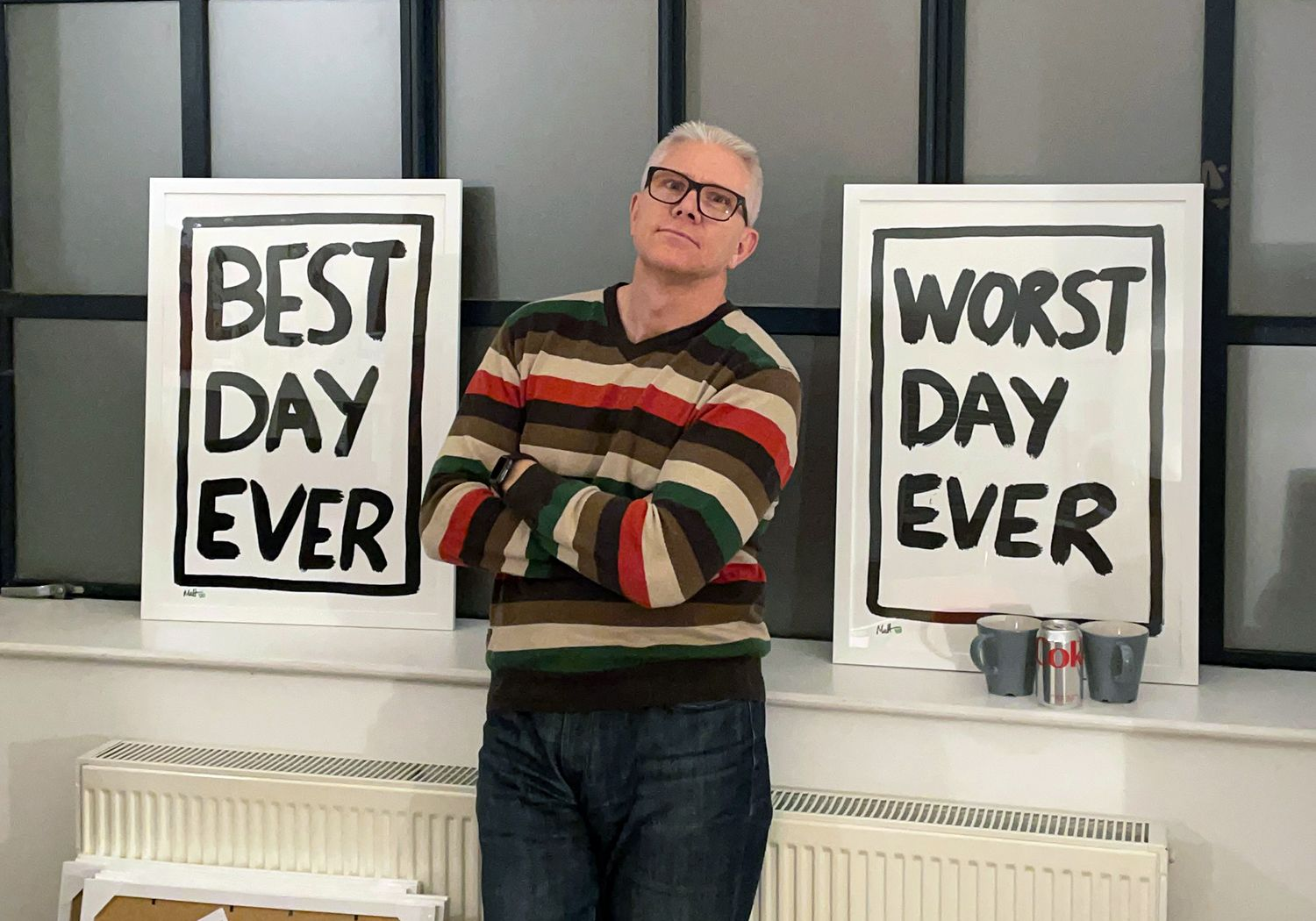
Matt Eley

Matt Eley • 15 April 2026

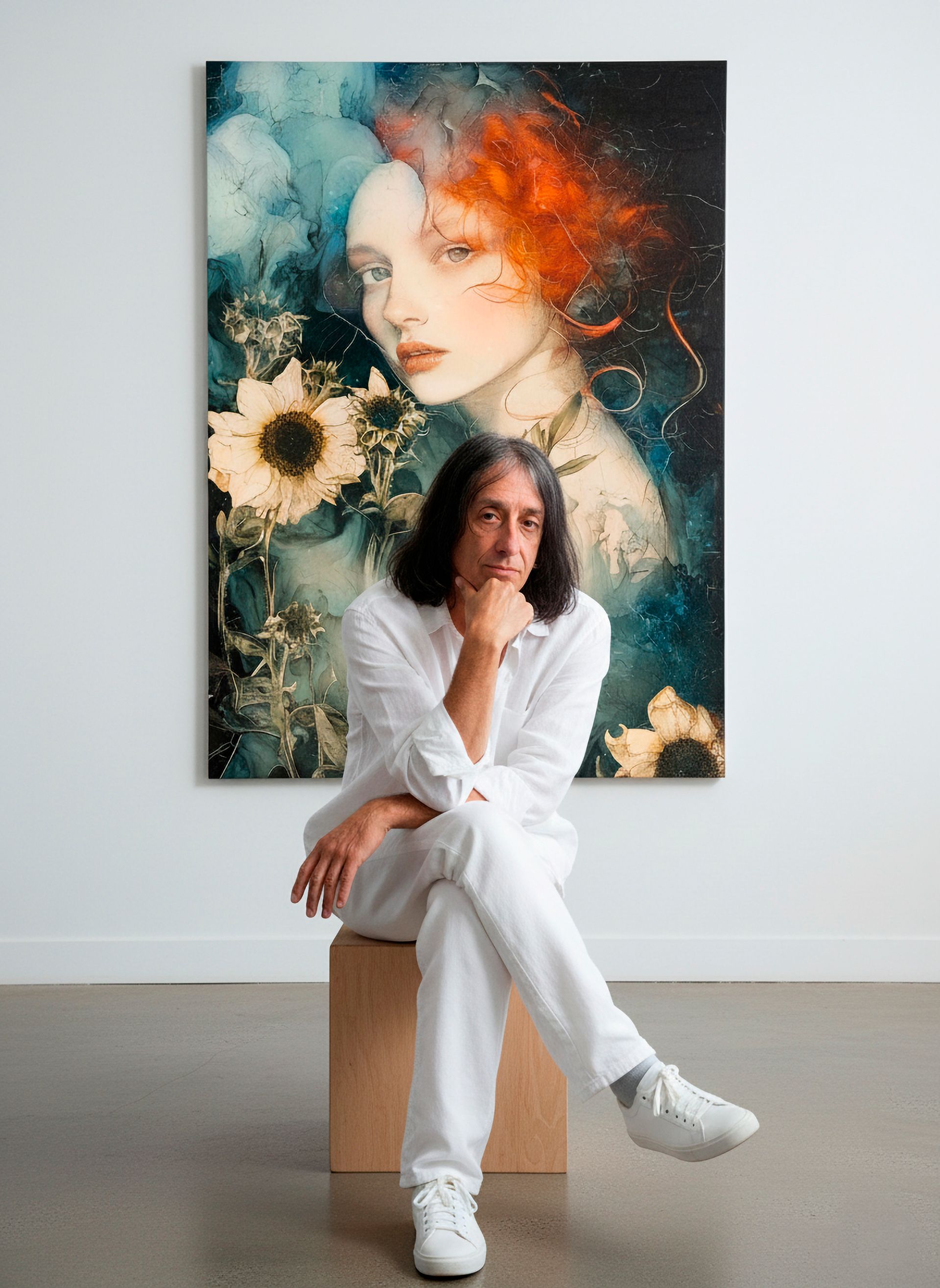
1. As a young person, what did you imagine your future might look like and when did creativity first feel like more than just something you enjoyed?


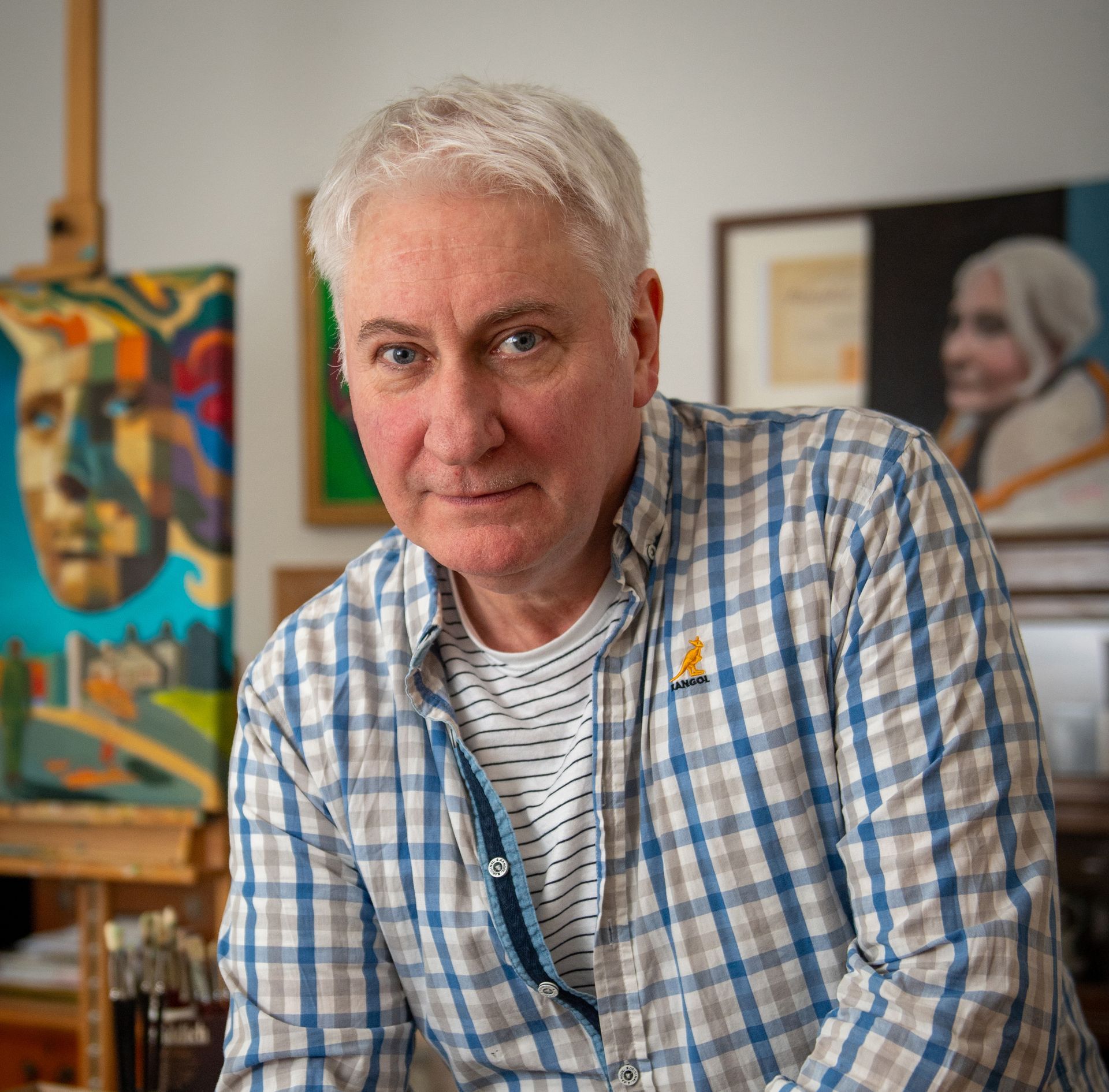
As a young person, I always imagined a future that was visually driven, though I did not yet have a language for what that meant. I knew I was drawn to making things, arranging, refining, shaping, but for a long time creativity felt like an instinct rather than a destination. It became more than just enjoyment when I realised I was using it to make sense of the world, not just decorate it. At that point it became a way of thinking and processing, so from my early teens I geared my education towards navigating a path to being a full-time creative.


2. Typography has long featured in your work. Do you remember when words, letters, or visual language first began to resonate with you emotionally?


Words, numbers and letters resonated with me before images did. I became aware early on that language could wound, comfort, define, or distort, sometimes all at once. Typography made that visible. Seeing how a word could change meaning through spacing, weight, size, colour and context revealed that language was not neutral. It carried emotion, power, and memory. That discovery stayed with me and eventually became central to my work.

3. Before fully embracing fine art, you ran a design agency. How did working within commercial constraints shape your discipline and eye?


Running a design agency for nearly 30 years sharpened my discipline significantly. Commercial constraints force clarity. You learn how to strip ideas down, how to communicate effectively and efficiently, how to make decisions quickly and justify them. It trained my eye to recognise balance, hierarchy and restraint. These skills still underpin my work today. Even now, that discipline acts as a structural backbone, even when the content is more emotional or unresolved.


4. What did design give you and equally, what did it limit that eventually pushed you toward a more personal artistic practice?


Graphic design gave me precision, problem solving skills, and an understanding of audience. But it also imposed boundaries around safety, legibility and approval. Global brands are very risk adverse, and over time those limits can become suffocating. I realised I was spending more energy negotiating meaning than expressing it. Fine art offered space to let ambiguity exist, to say something without needing to resolve it or sell it.


5. Your use of text often feels both precise and emotive. How do you approach typography as a carrier of feeling rather than function?


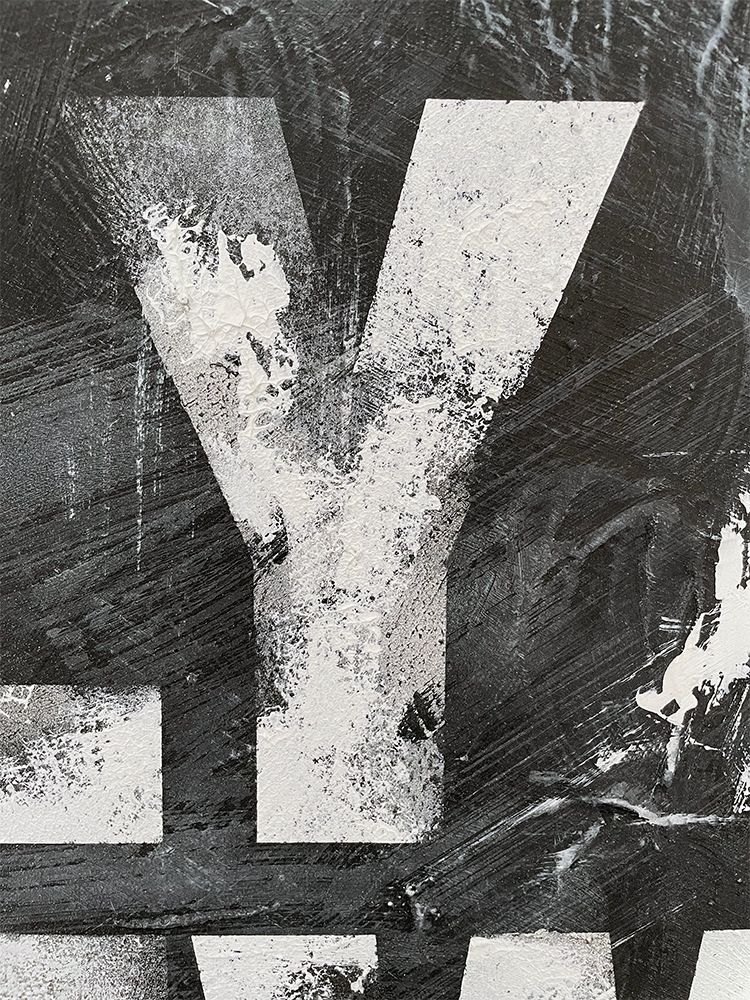
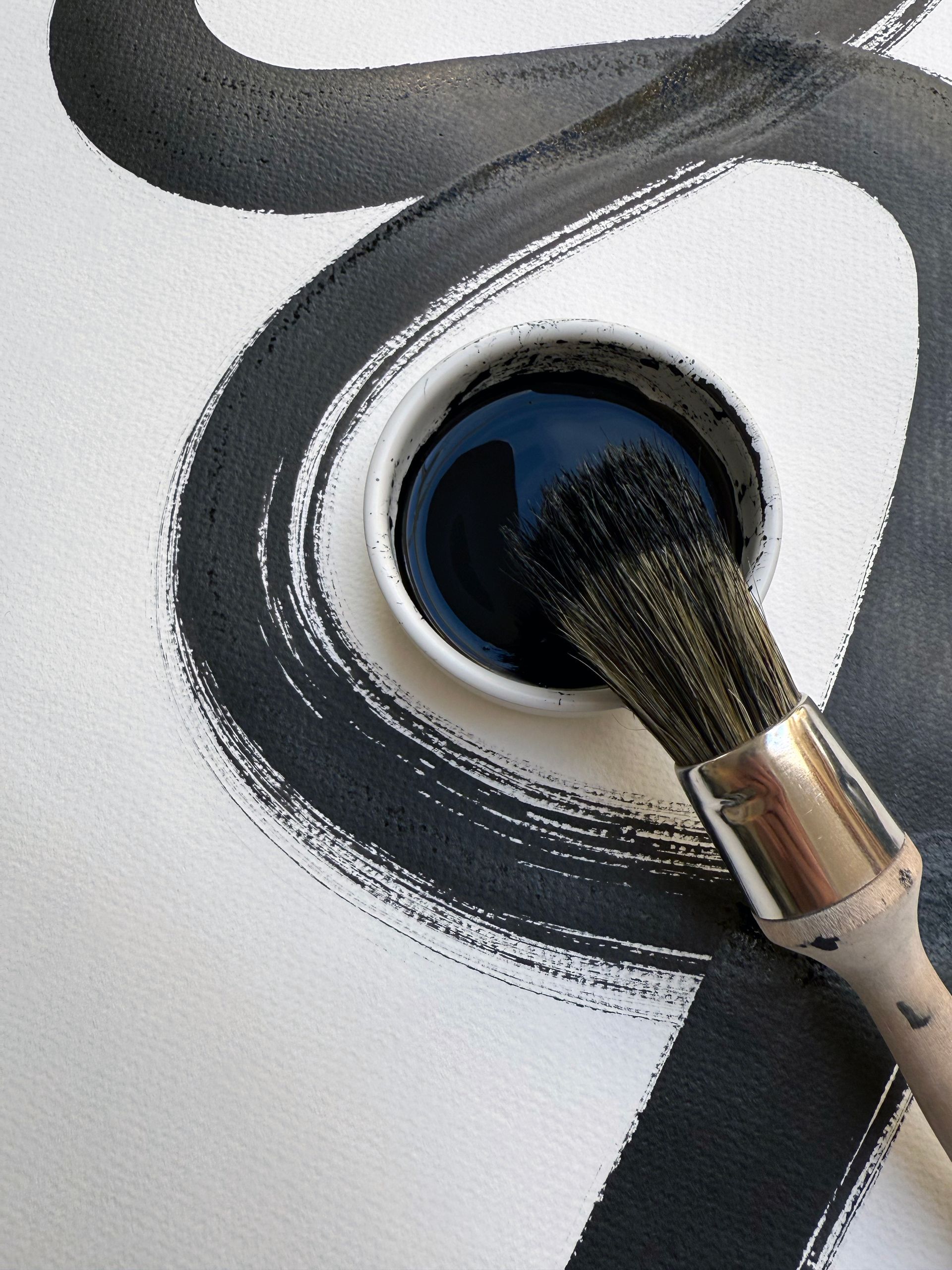
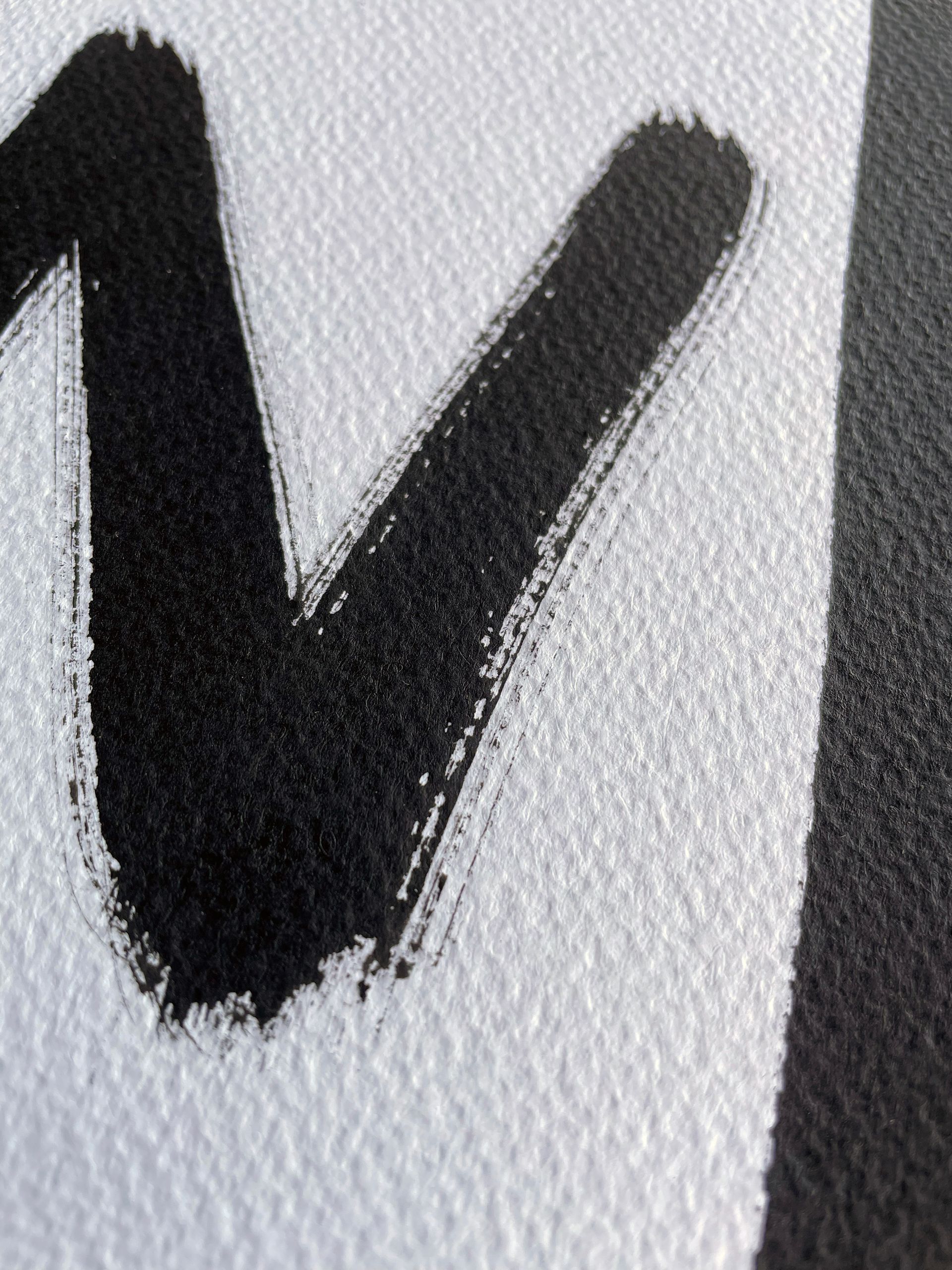
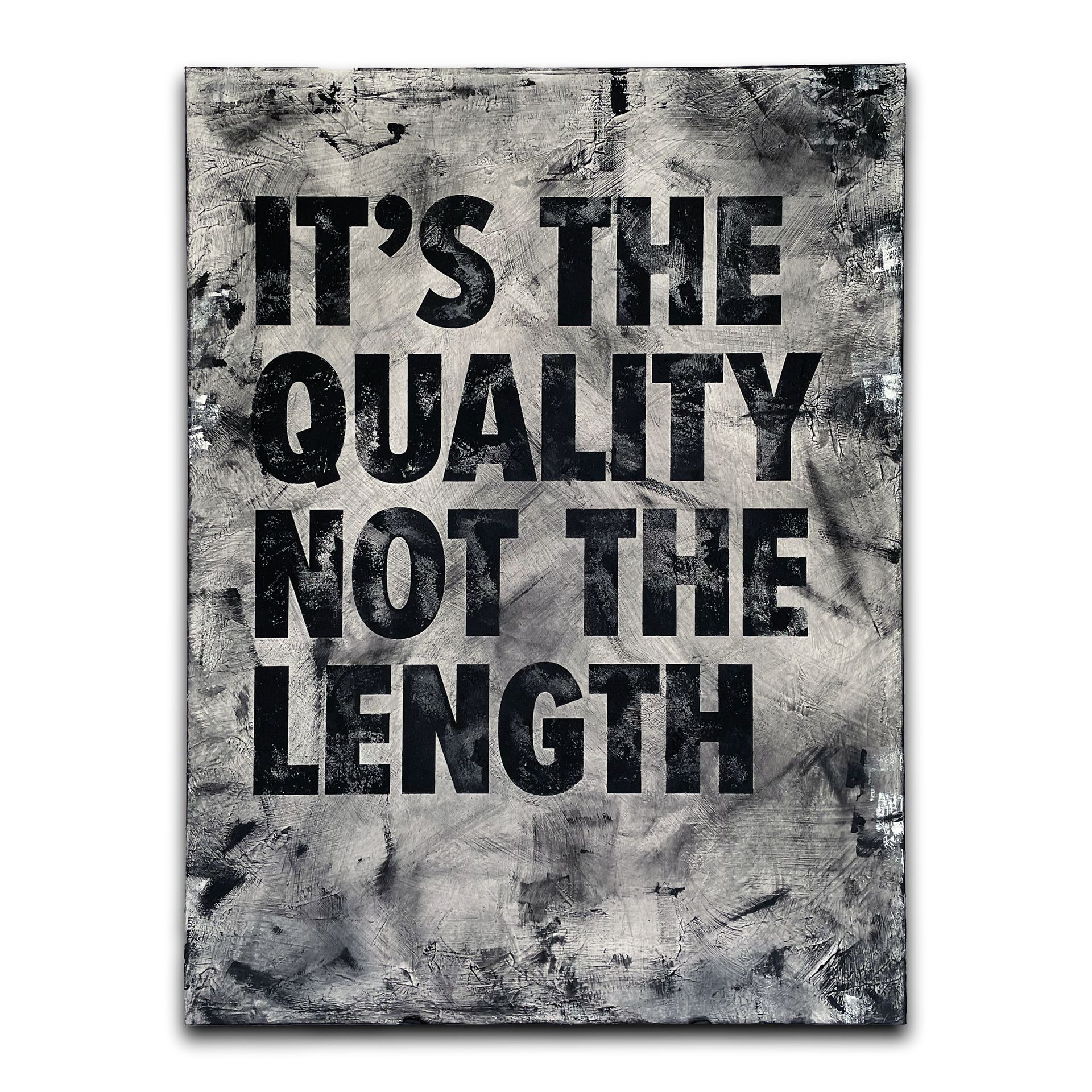
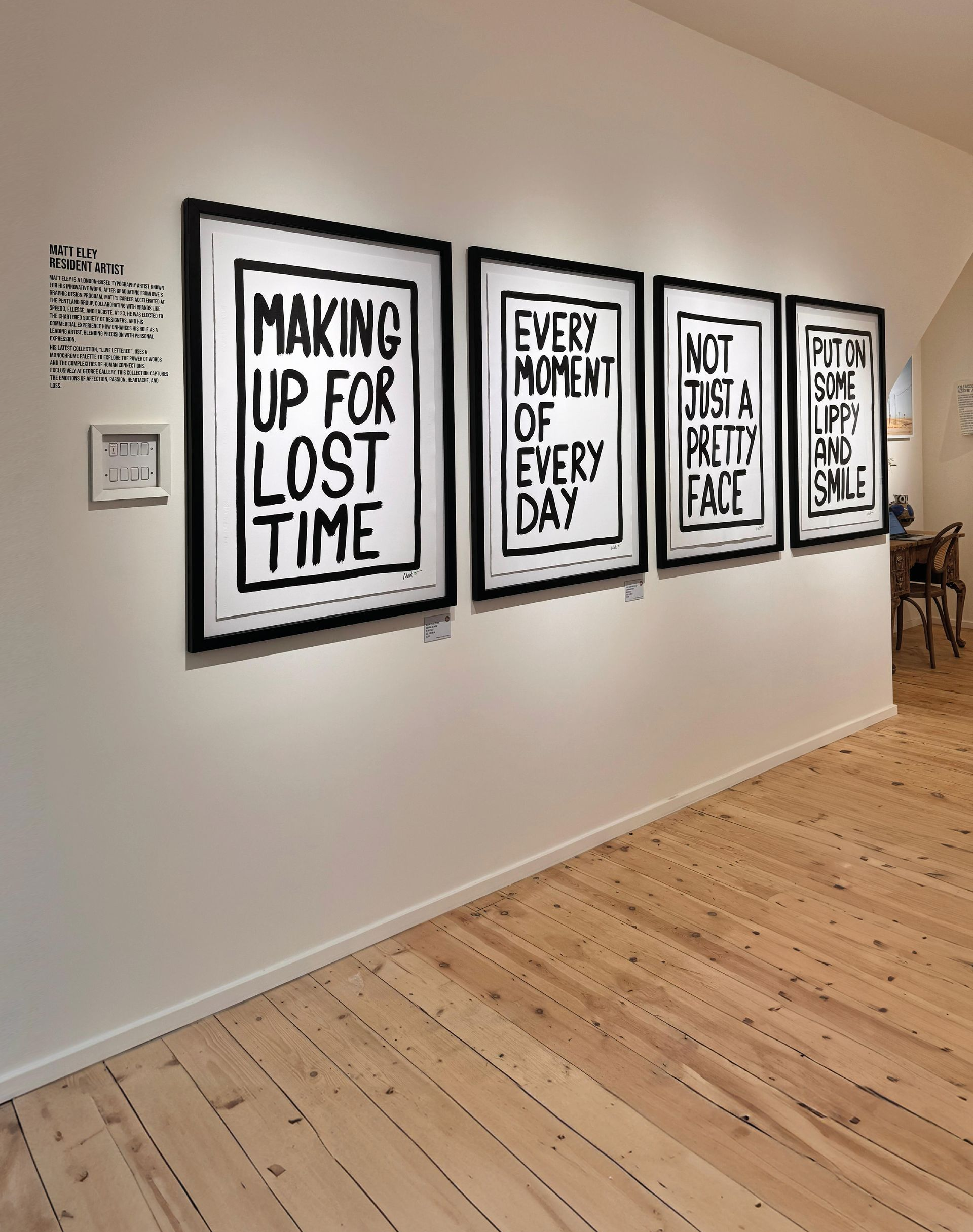
I believe typography is the fastest route to emotional engagement. Rather than asking viewers to decode images or wait for feelings to slowly emerge, I want language to confront them directly. A phrase can strike first and resonate later. In an age where words are endlessly reproduced, politicised, and skimmed on screens, I slow them down by hand painting them, giving language physical weight and presence again. I believe the emotional force of words persists. A single line of text can act as a mirror, inviting viewers to recognise their own love, loss, hope, or regret within it.
6. Was there a moment when you knew it was time to step away from agency life and commit fully to your own voice?


There wasn’t a single dramatic moment. It was a slow accumulation of friction. I noticed that my personal work carried more urgency than my professional output. Eventually, it felt dishonest to keep my own voice compartmentalised. Stepping back was not about rejecting design. It was more about reclaiming authorship.


7. Looking back, how do you think your background in design continues to inform the structure, clarity, or restraint in your work today?


Design still governs the core of my work, I think it always will. Even when the surface feels loose, raw or damaged, there is an underlying order holding it together. That tension between control and erosion is intentional. Design taught me when to stop, when to leave space, and when not to over explain. Restraint, for me, is an ethical choice as much as an aesthetic one.
8. Standing where you are now, how close does your current practice feel to the creative life you once imagined and how has that vision changed? Any upcoming exhibitions or showcases we can talk about?


I am closer now than I ever expected to be, though the vision has matured. I once imagined creativity as freedom from all limits. Now I understand it as the freedom to choose which limits matter. My practice feels aligned with that understanding. I get a huge amount of support from the gallery curators which I am grateful for. At the moment I am finishing some work for a group show at George Gallery in Brighton that opens at the end of January. I’m also preparing a small collection for Kell Art in East London. I always have a few commission in progress as well, you’d be amazed how many people have got something they want to say…
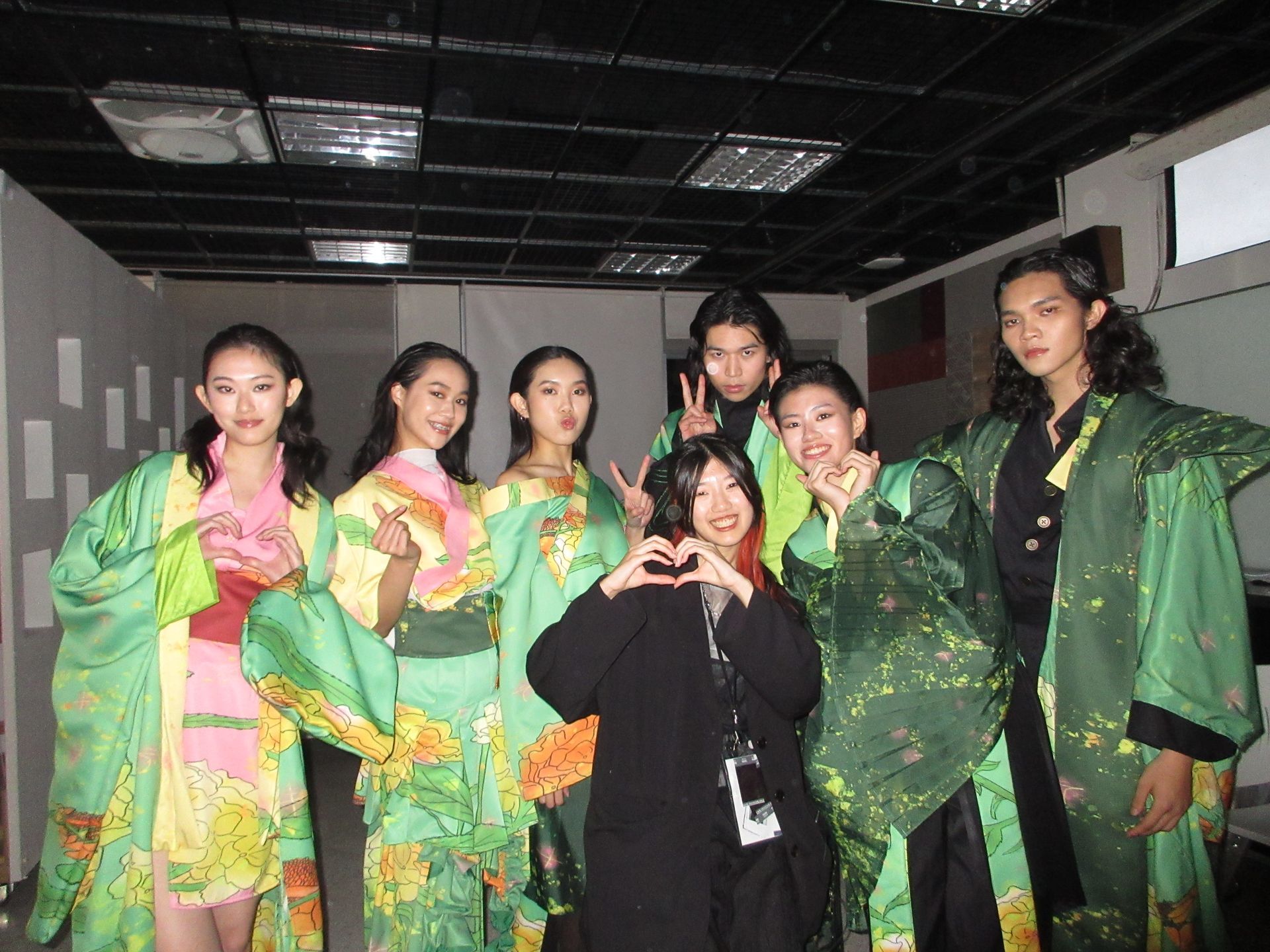
by Yung Ching, Chang 26 March 2026
Yung Ching, Chang is a Taiwanese fashion designer whose practice operates at the intersection of cultural translation and contemporary womenswear. Situated within a broader discourse on identity, materiality, and form, her work examines how traditional cultural structures can be rearticulated through modern garment construction. By engaging deeply with fabric behavior and structural manipulation, Yung Ching develops a design language that negotiates between historical reference and present-day embodiment.
by Lucia Lippolis 29 January 2026
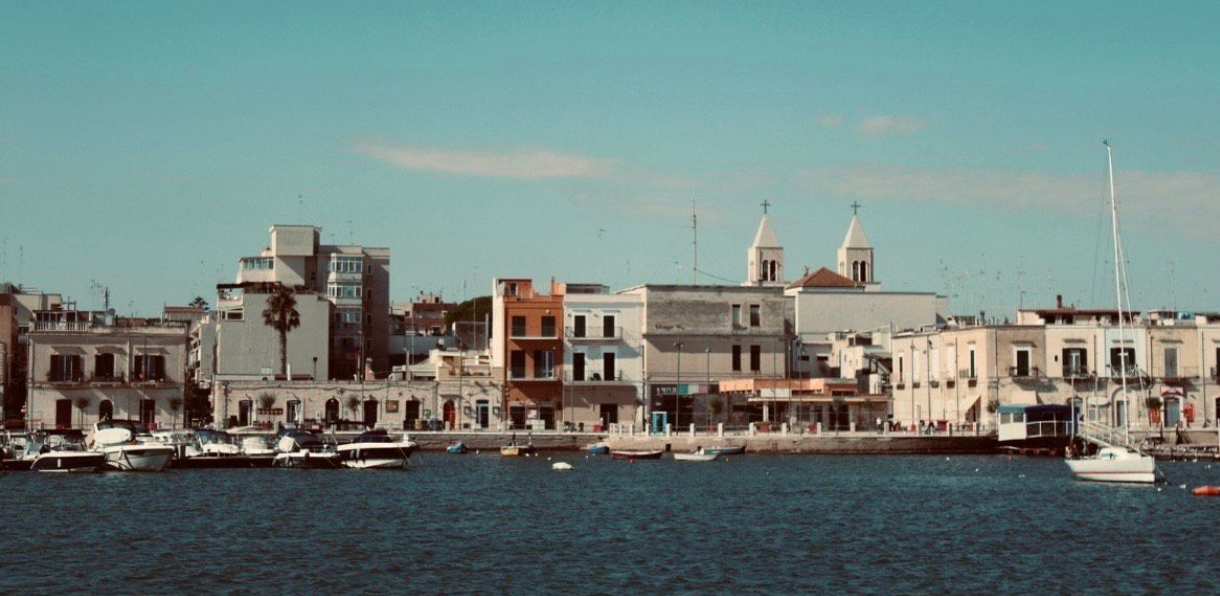
“A quiet moment by the water,where time slow down”. The place I call home. S.Spirito(Puglia). This photograph marks my first publication.A milestone filled with gratitude and emotion.
by Ramsay Allan 27 January 2026
Scotland-based oil painter Ramsay Allan creates symbolic and surreal compositions that explore the inner landscape of the human experience. Blending classical oil painting techniques with dreamlike environments, his work moves beyond surface appearance and into the psychological and spiritual dimensions of being. Rather than depicting the world as it is seen, Allan paints spaces that feel remembered, imagined, or inwardly perceived. His figures often appear suspended within vast symbolic settings — environments that suggest memory, consciousness, and the unseen forces shaping human life. Light, space, and atmosphere become narrative tools, guiding the viewer into a contemplative state rather than a purely visual one. At the heart of Allan’s practice is an interest in consciousness, presence, and the human journey . His paintings do not provide fixed answers, but instead invite reflection. Each work becomes a visual meditation — a meeting point between the outer world and the inner one. 
by Sofia Mobilia 19 December 2025
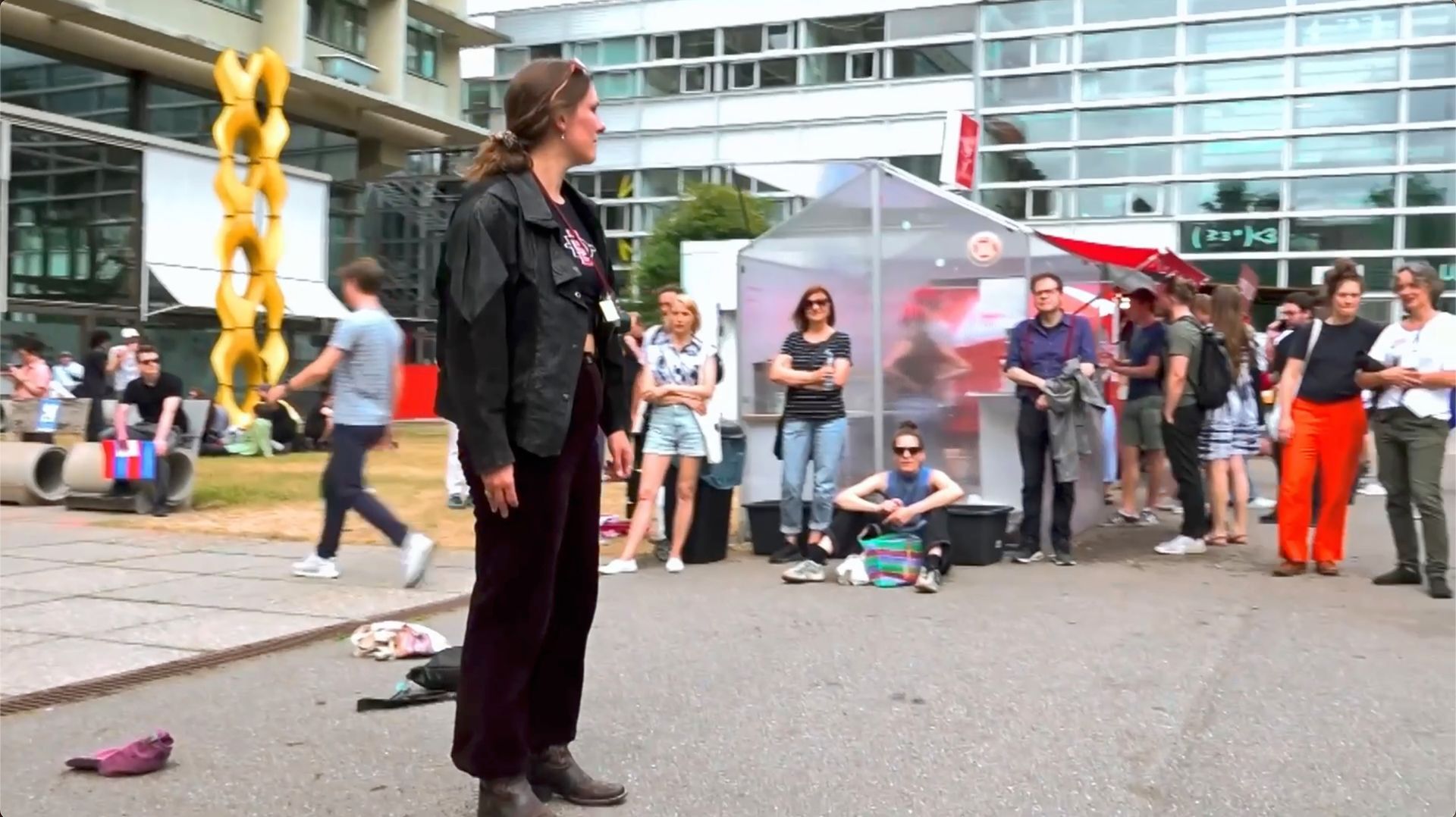
IT’S TIME Performance by Sofia Mobilia Sat, July 12, 2025 | 4 PM (STR) / 7 AM (CA)  In the courtyard of the Academy of Fine Arts in Stuttgart, I’m in the middle of a conversation with friends and fellow students when, at 3:55 pm, my phone alarm rings - the starting shot of my performance. I’m dressed simply in black shorts and a black top. With me, I carry a bag of clothes and a portable speaker. Through a VPN connection to California, I tune in to the San Diego radio station I listened to throughout my two exchange semesters there. While the radio fills the courtyard, I unpack pieces from my California bag – clothes I wore in San Diego – and put them on, one after another: my San Diego State University shirt, my vintage corduroy pants, the cowboy boots I danced in at line-dance nights, my 80s leather jacket, and finally the sailing cap from my host mum’s regatta, paired with the sunglasses I picked up on a road trip through Arizona and Utah. This was the exact outfit I last wore on the streets of California in late May – complete, of course, with my beloved analog film camera. But what is really happening here? The title of the performance leaves room for multiple interpretations. It is time to get up – quite literally. With the nine-hour time difference, it’s morning on the other side of the world: the moment to wake up, get dressed, and start the day. But also, in a metaphorical sense: life goes on. Returning home after building new structures, routines, and personal growth abroad is never seamless. And yet, the transformation persists day by day – within oneself, through memory, souvenirs, and the skills and knowledge acquired. Old and new merge into something else. A running-on process. The desire to go back – to book the next flight – or simply to close one’s eyes and listen, to feel the warmth of textures, to drift. Thoughts jump between realities. Emotions shift over time. Does homesickness drift away? Letting go and holding on, in constant alternation. Saying goodbye while arriving anew. Often, we slip back into our memories without anyone noticing. Here, the audience notices. But only those who know my story truly understand what is happening. For others, it might feel confusing, even uncomfortable, to witness personal thoughts and feelings made visible in public space. When is something performed, acted? Almost always. We hide behind smileys in text messages, even in face-to-face conversations, pretending to feel what is expected of us. Except in that one moment – when I let myself fall, Fall into the Sun . It’s the title of my favorite song. A song I switched to after finishing dressing. A song I played endlessly during my stay, one I even heard live in California. This performance was also a process to move through my inner feelings, accepting them, and showing them as they are – regardless of what friends, family, professors, colleagues, or strangers of all ages might think. And what happens after someone interrupts by switching off the speaker? That’s when I open my eyes and, for the first time since the beginning of the performance, meet the gaze of my audience. In a society where time is such a dominant force, this performance deliberately takes its time. It slows down, becoming a space for processing and transformation – both emotionally and temporally. The form mirrors the content. And for a final twist, the documentation is set to play again in California. Website: www.sofiamobilia.com Instagram: sofiamobilia.art E-Mail: sofiamobilia@web.de
by Wen-Ying Yang (Jonah Yang) 21 November 2025
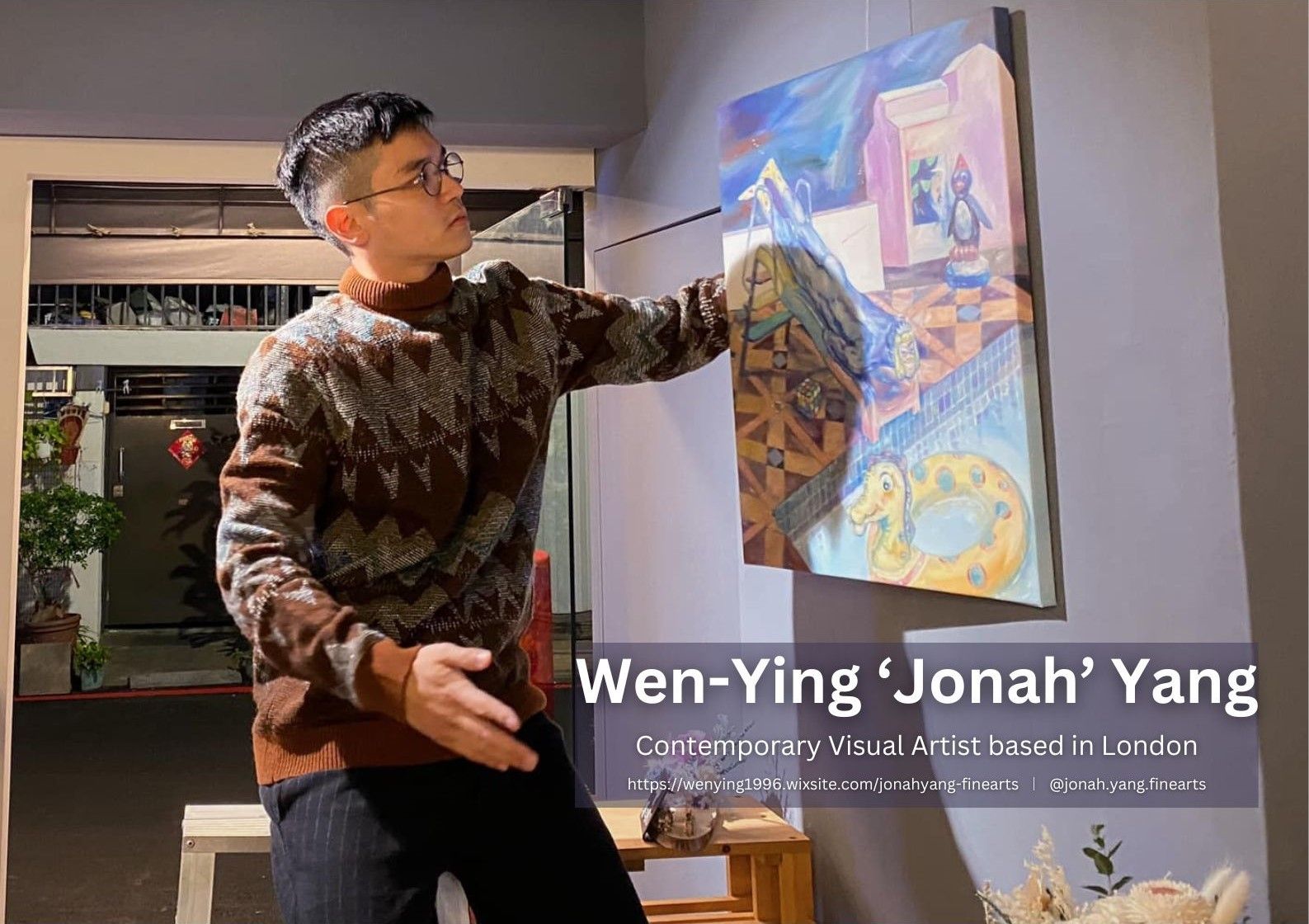
Artist Wen-Ying Yang (Jonah Yang), a cutting-edge Taiwanese Contemporary Artist residing in London, United Kingdom. He graduated from Kingston University London with a Master's degree in Art & Space. He has exhibited his artworks in numerous galleries and non-commercial spaces in the UK and internationally. His original large oil paintings "Starry Sky Series" caught the attention of a Chinese art direction team, leading to an invitation to reveal his paintings and create on-site in Ningbo, Zhejiang, China. As a result, His artworks have appeared and been featured on multinational art platforms in China, Singapore, Malaysia, Thailand, and Vietnam, showcasing his dedication and creative energy on a global stage.
by Daniel Varela 2 November 2025
Daniel Varela is a talented Argentine visual artist and fine art photographer who immerses himself in a universe of creativity through visual expression. His passion for art and photography drives him to explore new perspectives and innovative approaches, with the purpose of capturing beauty in all its fullness. With a dynamic spirit and a forward-thinking vision, he has ventured into contemporary art inspired by new digital processes. Through the use of advanced technologies, he has created unique and captivating works that challenge the boundaries of creativity. His artistic production has become a source of inspiration for other creators and photography enthusiasts, establishing a valuable contribution to the world of art and culture. 
by Tianyun Zhao 30 October 2025
London-based moving image artist and photographer Tianyun Zhao (Yano) creates works that drift between stillness and transformation, where memory becomes light and time turns tactile. Her practice navigates the intersections of image, perception, and identity, revealing how the digital age reshapes our sense of the self and the spaces we inhabit. Drawing from Eastern philosophy and the rhythms of urban life, Zhao constructs visual worlds that exist between reality and imagination — contemplative yet quietly rebellious. Through the fusion of lens-based imagery, AI-generated fragments, and fashion-inflected aesthetics, she invites viewers into atmospheres where emotion and technology merge in a delicate equilibrium. “I see my work as a dialogue between the visible and the invisible — a meditation on how we remember, and how we are remembered,” Zhao reflects. Expanding the Language of Moving Image Zhao’s practice has been presented internationally across galleries, festivals, and digital platforms. Her recent exhibitions include Field of Clarity at Photofusion Gallery (London, 2025), Broken Silence at Summerhall – In Vitro Gallery (Edinburgh, 2025), The Green Grammar Exhibition at art’otel Hoxton Gallery (London, 2025), and Fragments of the Past, Futures Unfolding at Normanou 3 (Athens, 2025). She also participated in Video Edition ArtIn as part of The Wrong Biennale (London, 2025), a globally recognised platform for digital and post-internet art. Zhao’s work has appeared in publications such as Artist Talk Magazine (Issue 39, 2025) and Viridine Literary Issue 03 (UK, 2025), reflecting her expanding presence in both gallery and online contexts. 
by Nyll Axis 27 October 2025
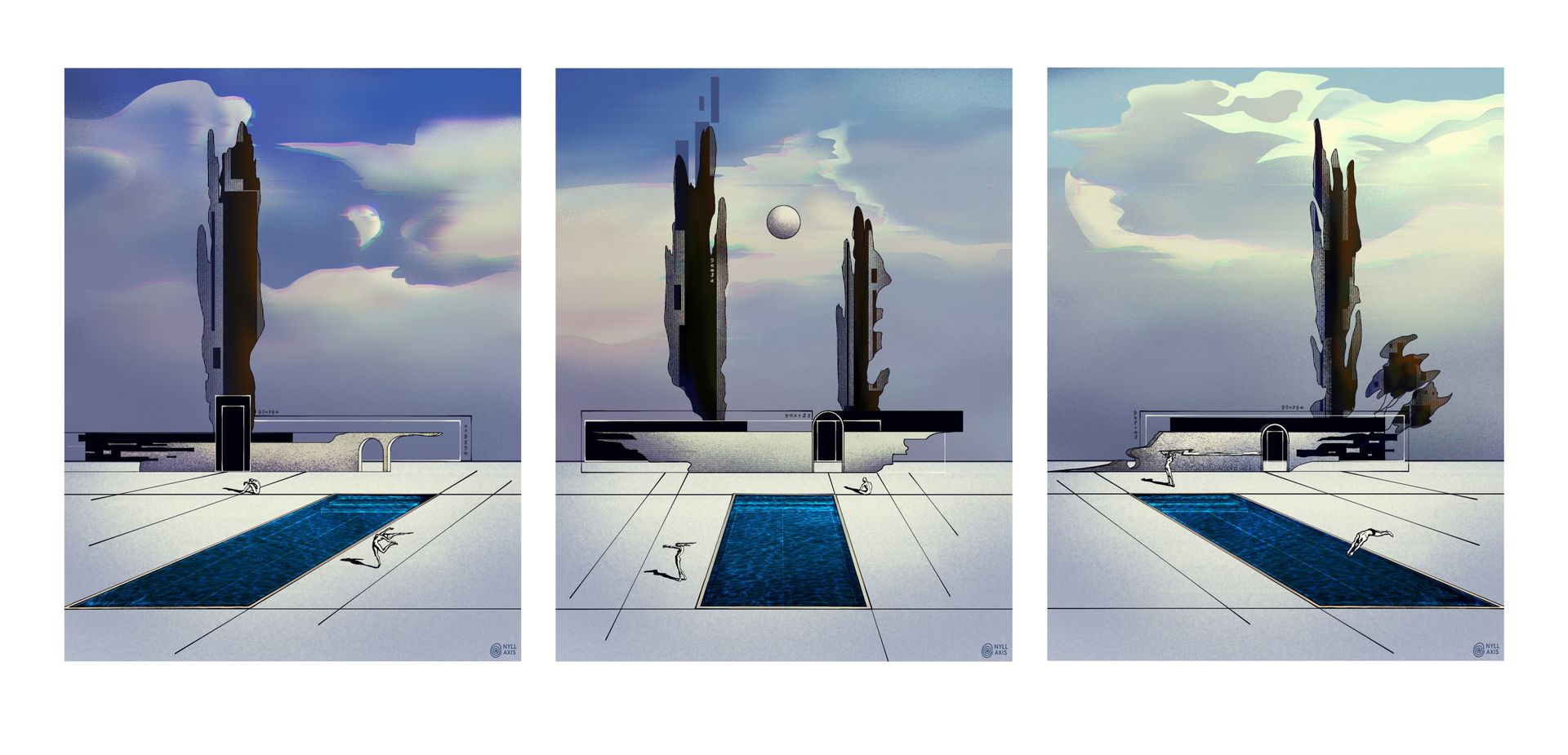
Nyll Axis is the pseudonym of an artist who prefers to remain incognito. His paintings emerge as nameless presences moving through shifting layers of perception. There are no stories, no time — only appearances and disappearances. What remains are abstract glyphs with the illusion of meaning: thresholds, lines, dissolving architectures. These are not narratives but signals, pointing beyond knowledge toward the vanishing wall of the self.
by Ziyi Huang 30 September 2025
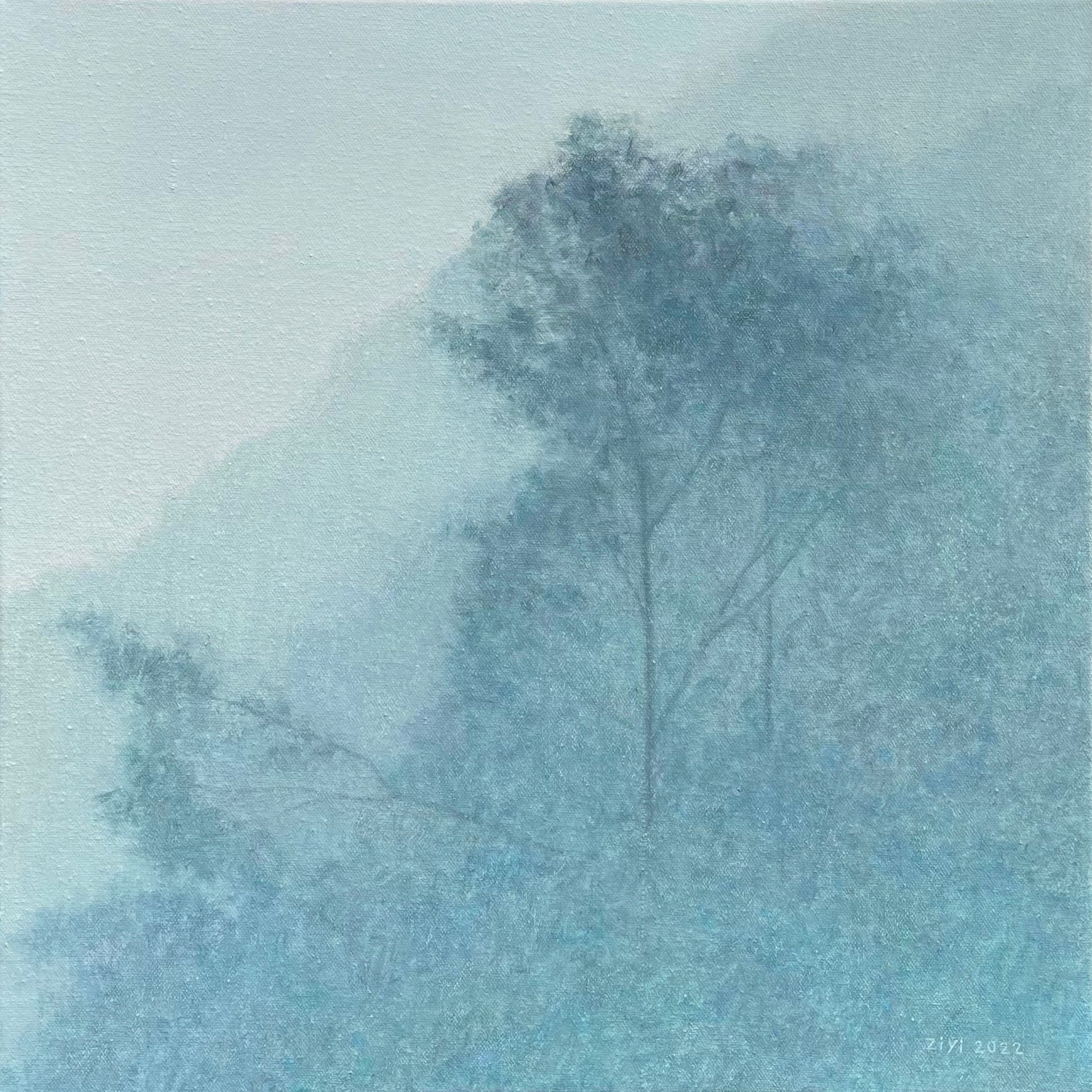
Ziyi Huang is a Chinese oil painting artist. His recent works are mainly landscapes inspired by his travels. He received Bachelor's and Master's degrees from China Academy of Art, where he is now studying for a Doctoral degree. He participated in an artist residency at Cité Internationale des Arts in Paris, France from 2018-2019, and studied at Maryland Institute College of Art in Baltimore, USA as an international exchange student in 2024. His paintings have been exhibited in China, Japan, France, UK, Canada, Italy and Latvia, and he has held solo exhibitions in Hangzhou and Xiamen, China. He is a member of the Federation of Canadian Artists (FCA), International Council of Visual Arts (ICVA), 90' Creative Art Society, Zhejiang Artists Association and Zhejiang Association of Oil Painters. 
by Daniel Agra 7 September 2025
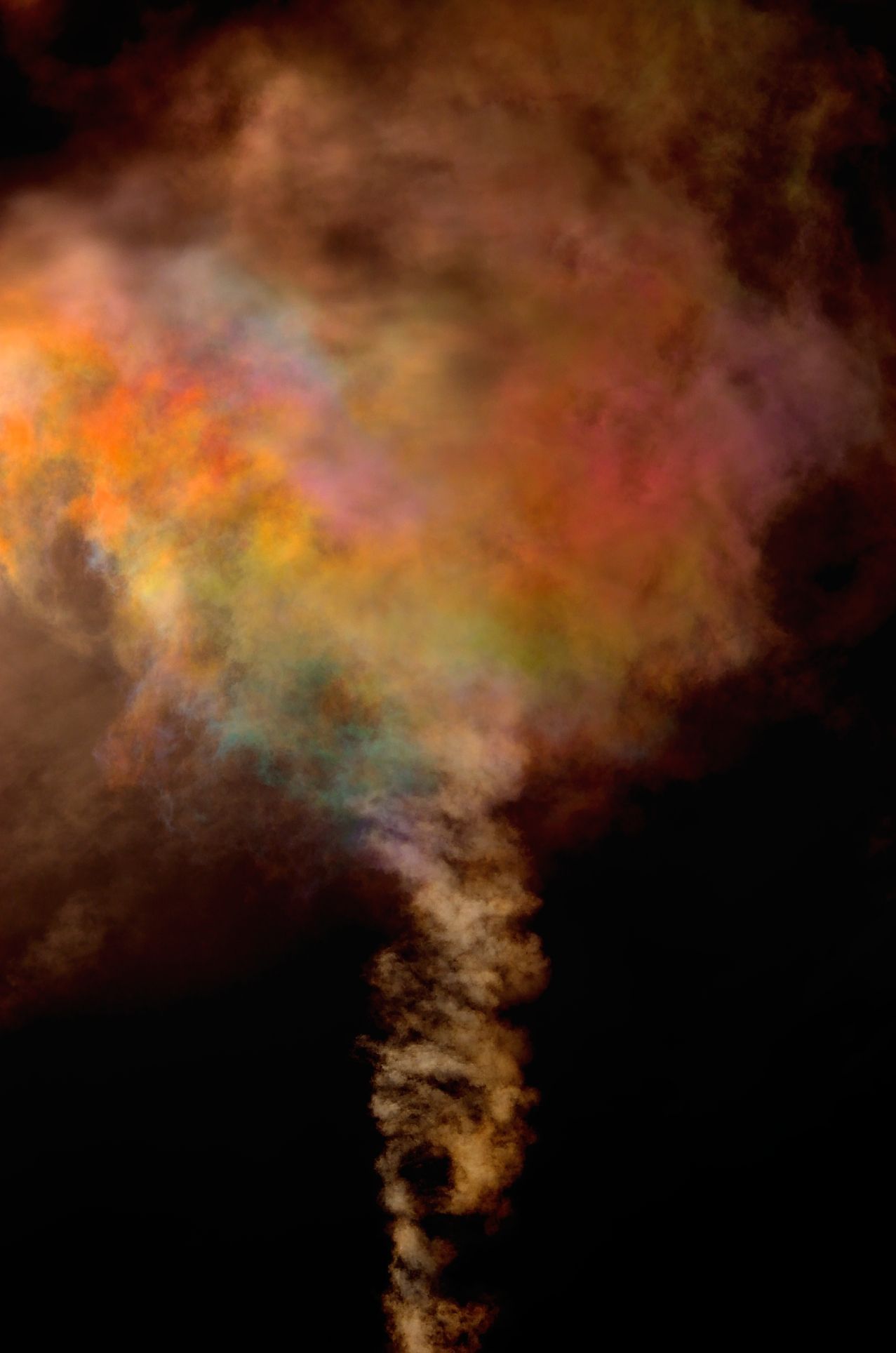
Daniel Agra is Spanish artist of abstract and fine art photography. In the artistic field his work is defined as subjective, experimental and conceptual expressionist visual poetry, with a profound imaginative capacity and endowed with strong intuition. Defined by a resounding individual and experimental personal mark that allows him to mentally project a great deal of his compositions with a language and style full of symbolism. The defined perception and emotional depth of his work should be highlighted reflecting his interest in the subconscious, abandoned methods, dialogues and conventional and traditional photographic narratives which transcend their state to be symbolised in a deep analysis, to be recreated into a poetic frontier between the material and the spiritual, between man and the environments he inhabits, distinctive elements that emphasise the communicative character in his allegorical symbology and relative to the inner world, raising it to levels of evocative spirituality in transcendental and vindictive themes, on the existential importance of the individual in his creative freedom, a personal form of contemporary expression that does not bow to the established norms, an archetype through a vocabulary with meticulously selected images and iconographies. Over time, his works have achieved wide appreciation, recognition and international dissemination. The more than 50 awards and international honour mentions of photography that he has achieved during his career should be emphasised, he has shown his work and participated in exhibitions across various countries, as well as published in assorted media and international art guides. His work can be found in national and international museums, foundations and private art and photography collections.